What Is The Meaning Of Monalisa. We estimate that there are at least 66600 persons in the world having this name which is around 0.001% of the population. Mona lisa, oil painting on a.
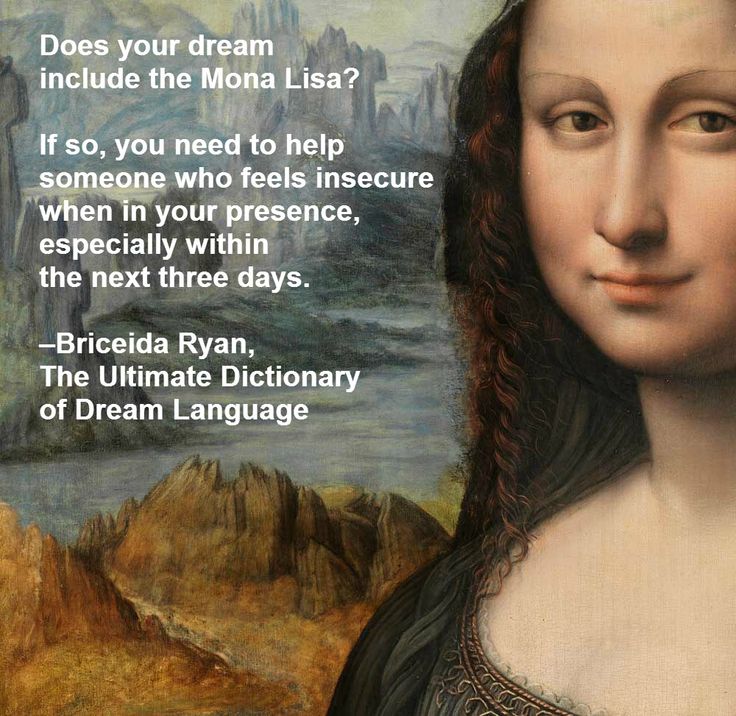
What does dreaming about the Mona Lisa mean? dreams interpret from www.pinterest.com The Problems with the Truth Constrained Theories about Meaning
The relation between a sign and its meaning is known as"the theory on meaning. Within this post, we'll discuss the problems with truth-conditional theories of meaning. Grice's analysis of speaker-meaning, and The semantics of Truth proposed by Tarski. The article will also explore opposition to Tarski's theory truth.
Arguments against the truth-based theories of significance
Truth-conditional theories of meaning claim that meaning is the result from the principles of truth. This theory, however, limits its meaning to the phenomenon of language. In Davidson's argument, he argues that truth-values can't be always reliable. So, we need to recognize the difference between truth values and a plain assertion.
Epistemic Determination Argument Epistemic Determination Argument is an attempt to justify truth-conditional theories about meaning. It rests on two main principles: the completeness of nonlinguistic facts, and understanding of the truth-condition. But Daniel Cohnitz has argued against these premises. Thus, the argument is not valid.
Another major concern associated with these theories is the implausibility of the concept of. This issue can be addressed by mentalist analysis. This way, meaning is evaluated in terms of a mental representation instead of the meaning intended. For instance, a person can see different meanings for the words when the person uses the exact word in several different settings however, the meanings of these words could be identical depending on the context in which the speaker is using the same word in various contexts.
While the most fundamental theories of meaning attempt to explain the meaning in relation to the content of mind, non-mentalist theories are occasionally pursued. This could be due to doubts about mentalist concepts. They can also be pushed for those who hold mental representation should be assessed in terms of the representation of language.
Another important advocate for this view Another major defender of this view is Robert Brandom. This philosopher believes that meaning of a sentence is dependent on its social context and that speech actions involving a sentence are appropriate in the setting in where they're being used. This is why he developed a pragmatics concept to explain the meanings of sentences based on traditional social practices and normative statuses.
Problems with Grice's analysis of speaker-meaning
The analysis of speaker-meaning by Grice places significant emphasis on the utterer's intent and its relationship to the significance in the sentences. He argues that intention is something that is a complicated mental state that needs to be understood in order to understand the meaning of the sentence. However, this approach violates speaker centrism through analyzing U-meaning without M-intentions. Additionally, Grice fails to account for the notion that M-intentions cannot be specific to one or two.
In addition, Grice's model doesn't account for important instances of intuitive communication. For instance, in the photograph example that was mentioned earlier, the subject does not make clear if the message was directed at Bob as well as his spouse. This is because Andy's photograph does not show whether Bob is faithful or if his wife is not faithful.
While Grice is correct the speaker's meaning is more fundamental than sentence-meaning, there is still room for debate. Actually, the distinction is crucial to the naturalistic recognition of nonnatural meaning. In the end, Grice's mission is to provide an explanation that is naturalistic for this non-natural meaning.
To appreciate a gesture of communication we must be aware of the intention of the speaker, and that's an intricate embedding of intents and beliefs. Yet, we do not make intricate inferences about mental states in everyday conversations. In the end, Grice's assessment of speaker-meaning does not align with the real psychological processes involved in language comprehension.
While Grice's model of speaker-meaning is a plausible explanation of this process it's not complete. Others, like Bennett, Loar, and Schiffer, have created more elaborate explanations. These explanations, however, are likely to undermine the validity on the Gricean theory, because they consider communication to be an activity that is rational. In essence, audiences are conditioned to think that the speaker's intentions are valid because they understand the speaker's intent.
Additionally, it fails to reflect all varieties of speech actions. Grice's model also fails acknowledge the fact that speech actions are often employed to explain the significance of sentences. In the end, the value of a phrase is limited to its meaning by its speaker.
The semantic theory of Tarski's is not working. of truth
While Tarski asserted that sentences are truth bearers It doesn't necessarily mean that it is necessary for a sentence to always be correct. Instead, he tried to define what constitutes "true" in a specific context. The theory is now an integral component of modern logic, and is classified as deflationary or correspondence theory.
One issue with the theory to be true is that the concept can't be applied to natural languages. This issue is caused by Tarski's undefinability concept, which declares that no bivalent language could contain its own predicate. While English might appear to be an in the middle of this principle and this may be the case, it does not contradict the view of Tarski that natural languages are semantically closed.
Yet, Tarski leaves many implicit constraints on his theory. For example the theory cannot contain false statements or instances of form T. Also, it is necessary to avoid what is known as the Liar paradox. Another drawback with Tarski's theory is that it is not conforming to the ideas of traditional philosophers. Additionally, it is not able to explain every single instance of truth in the ordinary sense. This is an issue for any theory of truth.
The second problem is the fact that Tarski's definition of truth calls for the use of concepts drawn from set theory as well as syntax. These are not the best choices when looking at infinite languages. Henkin's style of speaking is well established, however it does not fit with Tarski's concept of truth.
A definition like Tarski's of what is truth also difficult to comprehend because it doesn't consider the complexity of the truth. For instance, truth can't be predicate in the interpretation theories, and Tarski's definition of truth cannot clarify the meaning of primitives. Further, his definition on truth is not compatible with the concept of truth in terms of meaning theories.
However, these issues do not preclude Tarski from using this definition, and it does not conform to the definition of'satisfaction. In actual fact, the definition of truth isn't so clear and is dependent on specifics of object language. If you're interested to know more about this, you can read Thoralf's 1919 paper.
Issues with Grice's analysis of sentence-meaning
The problems that Grice's analysis has with its analysis of meaning in sentences can be summed up in two major points. The first is that the motive of the speaker must be recognized. The speaker's words must be accompanied by evidence demonstrating the intended effect. These requirements may not be fulfilled in every instance.
This problem can be solved through a change in Grice's approach to meaning of sentences, to encompass the significance of sentences that do not exhibit intentionality. This analysis also rests upon the assumption which sentences are complex entities that have many basic components. This is why the Gricean method does not provide any counterexamples.
This is particularly problematic as it relates to Grice's distinctions of speaker-meaning and sentence-meaning. This distinction is the foundational element of any naturalistically sound account of sentence-meaning. This is also essential for the concept of implicature in conversation. On the 27th of May, 1957 Grice presented a theory that was the basis of his theory that expanded upon in later publications. The principle idea behind the concept of meaning in Grice's work is to analyze the speaker's intent in determining what message the speaker intends to convey.
Another issue in Grice's argument is that it doesn't take into account intuitive communication. For instance, in Grice's example, it is not clear what Andy thinks when he declares that Bob is not faithful towards his spouse. However, there are a lot of counterexamples of intuitive communication that do not fit into Grice's theory.
The premise of Grice's argument is that the speaker must aim to provoke an effect in the audience. But this claim is not necessarily logically sound. Grice defines the cutoff with respect to different cognitive capabilities of the interlocutor as well as the nature of communication.
Grice's explanation of meaning in sentences doesn't seem very convincing, although it's an interesting analysis. Other researchers have developed more specific explanations of meaning, however, they appear less plausible. In addition, Grice views communication as a rational activity. People make decisions by recognizing their speaker's motives.
Monalisa is an alternate form of mona (irish, gaelic): Sun is the ruling planet for the name monalisa. The painting is generous enough in its dimensions to include the.
Mona Lisa Is A Famous Portrait Painted By Leonardo Da Vinci.
It means that this name is commonly used. Monalisa name meanings is noble. Also an italian contraction of madonna.
Vasari Identified Lisa Del Giocondo As The Subject Of The Painting And.
Name monalisa is of italian, french origin and is. Monalisa name meaning in english. Sun is the ruling planet for the name monalisa.
That Said, In Colloquial Language, A “Mona Lisa” Can Also Be Used To Refer To A Young Woman Who Is.
What is the meaning of monalisa ? What does mona lisa mean? The painting's novel qualities include the subject's enigmatic expression, the monumentality of the composition, the subtle modelling of forms, and the atmospheric illusionis…
Monalisa Is An Alternate Form Of Mona (Irish, Gaelic):
The detail that unlocks the mona lisa. The masterpiece is arguably the most famous painting of all time. The name monalisa has fire element.
Name Monalisa In The Italian, French Origin, Means Art;
People search this name as. O letter o meaning of monalisa. Monalisa is baby girl name mainly popular in christian religion and its main origin is gaelic.
Share
Post a Comment
for "What Is The Meaning Of Monalisa"

Post a Comment for "What Is The Meaning Of Monalisa"